
How every card is written.
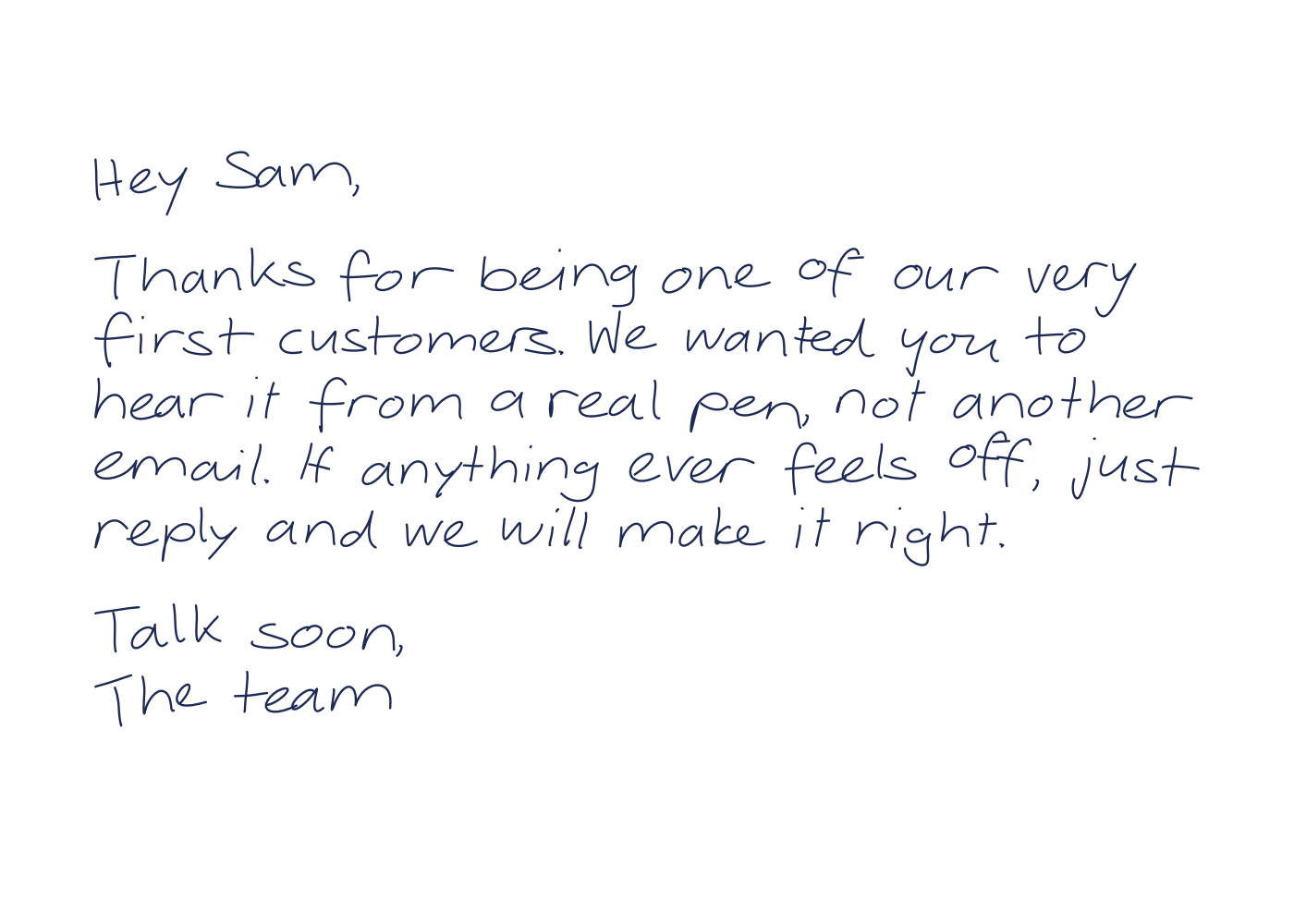
Plenty of services say real pen. Here is exactly what happens to your note between the API call and the mailbox.
- Your note arrivesBy API or from the portal, as the exact words to write: up to 500 characters, greeting and sign-off included.
- It becomes pen strokesA handwriting model turns the text into strokes, line by line, sized to the card, in the handwriting style you picked. Letters take their shape from the word around them, the way they do in real handwriting.
- Every word is read backOCR reads the strokes cold, word by word. Every word must read back as written and every number must read exactly. Anything unclear is redrawn before the pen moves.
- A robot writes it in inkA robot holding a real pen writes the card in our New York studio, on your card design.
- Checked, stamped, mailedThe finished card is checked, stamped and mailed, in the US and abroad. Its status moves from created, to written, to mailed.
Ink you can feel
Some services print a handwriting font and call it handwritten. Every notecardHQ card is written by a pen on paper: the ink sits in the paper and the pressure shows. How to tell the difference.
What the pen can write
Letters, digits, spaces, line breaks and . , ! ? ' " - : ; ( ) / @ $ & % # + =. Symbols the handwriting model does not write natively are drawn as single-stroke glyphs, so "@brand" and "$1" come out right. Preview your own words.
Checked before it is queued
US addresses are verified and standardized before a note is accepted. An undeliverable one is refused, so nothing is written for a card that cannot arrive.
One card per event
Every API request carries an idempotency key. Retrying the same request returns the same note; it never writes a second card.
Send your first note.
Tell us what you want to send and we will set up your workspace.